Opportunities and challenges in the low-carbon economy
The low-carbon economy includes a wide range of projects and players contributing to carbon reduction, carbon offsetting or carbon removal technologies. These include renewable-energy developers, battery storage providers, grid infrastructure companies, industrial groups diversifying their energy mix, the banks and investors that finance them, governments providing guarantees, and multilateral institutions that help move projects forward. While many of these technologies proved their commercial value, their long-term success depends on a wider set of factors, including grid availability, policy support and market maturity.
To manage the range of risks within this economy, one must look at that ecosystem as a whole, and understand the challenges within specific regions and sectors. In mature markets such as Europe, risks are typically around whether infrastructure can keep up with demand. Elsewhere, the questions are often around political stability. Asia is an interesting region – it boasts mature low-carbon technologies, but its infrastructure challenges are often greater than in Europe. Meanwhile, new opportunities are emerging in traditional industries such as copper mining. Copper is essential for electricity networks, and according to the International Energy Agency clean-energy technologies could represent as much as 40% of demand in the next two decades.
How Allianz Trade supports the transition through Specialty Credit
Specialty Credit underwriters at Allianz Trade work with corporates, financial institutions and public agencies at different stages of the low-carbon technology supply chain, leveraging a Global team located in 7 countries with regional hubs led from Paris for Continental Europe, London, New York and Singapore.
This gives them an all-encompassing understanding of how sectors evolve and where the pressure points are likely to appear. Our Specialty Credit supports through three main areas of expertise:
Corporate trade finance, covers either the credit risk related to trade of goods or the non-payment of loans between businesses and financial institutions. This was the scenario when Allianz Trade supported the ramp-up and growth phase of companies active in EV charging infrastructure, or commercial contracts for the execution of large electricity grid projects. Allianz Trade could insure either the lending bank or an export company against the risk of a company defaulting on a loan or a commercial contract.
Structured finance, also known as structured credit, covers the risk related to a specific asset – typically project financing for long-term endeavors such as wind farms, battery storage or infrastructure. As an example, Allianz Trade covered a government guarantee of one of the largest carbon capture project in one country with Specialty Credit Green2Green. Financing carbon capture involves complex economics and significant technical and capacity risk. Before agreeing to insure the project, our underwriters needed to understand the wider financing structure, the storage element, the end-user demand and policy support. Crucially, they consider how it was likely to play out over its 15-year lifespan.
Sovereign or multilateral risk insurance: In countries where public funding or multilateral support is needed, we insure against a government default, or that political conditions affect a company’s ability to pay (also known as political risk insurance). Take our partnership with the International Finance Corporation (IFC)[MOU1.1]: A member of the World Bank Group, the IFC finances banks in emerging markets fostering sustainable growth, with Allianz Trade covering the risk of non-payment by these banks.
Backing the right low-carbon technologies for the long term
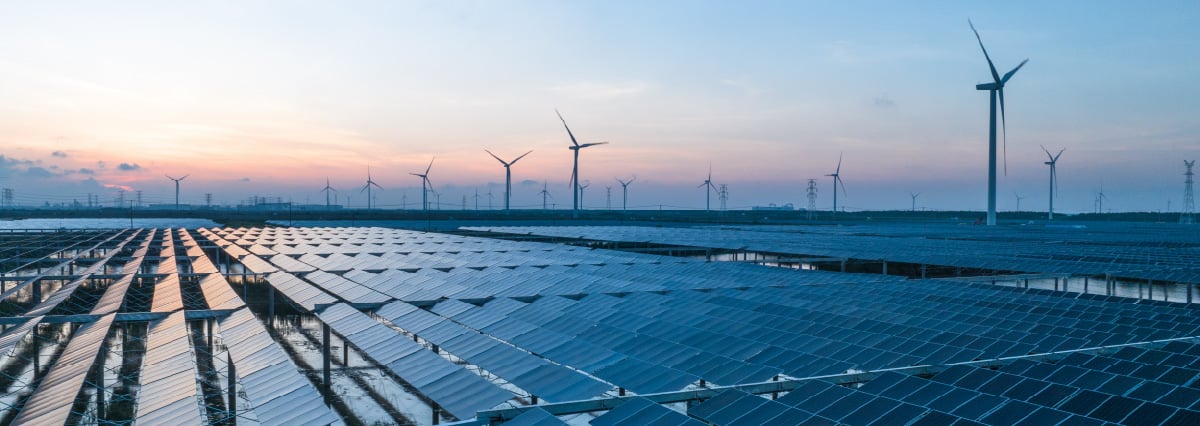
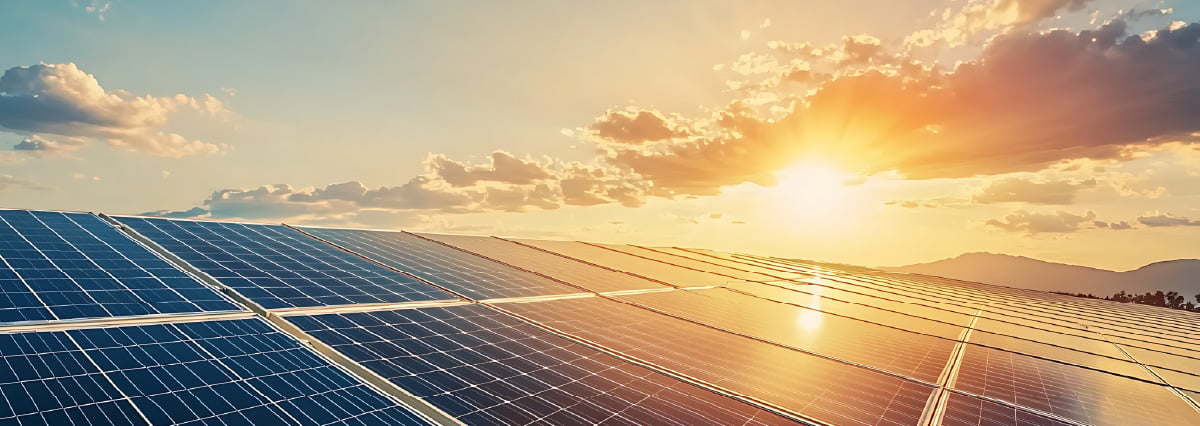
Today, solar and wind are established energy sources in many countries. The next phase of the transition is likely to come from the areas that help them work at scale: grid investment, battery storage, industrial decarbonization [AG2.1]and more sophisticated forms of asset finance.
Our role is to help clients navigate that next phase with confidence, and that means having a long-term perspective. In new sectors, it takes time to build knowledge, assess the risks properly and understand how a market evolves. As these new sectors are taking shape, our underwriters work alongside companies and institutions to manage risk while helping the transition move forward.